

The most underrated dataset in enterprise AI is your org chart | Rippling's Albert Strasheim
Rebuilding CLIs for agents, it’s time to get MCP-certified, and why human code review will never catch up

AI agents can't transform an org they can't see. Albert Strasheim, CTO at Rippling, joins the show to explain why agentic transformation starts with the employee graph, the system of record for who does what. He shares how Rippling assembles teams and primitives across silos, why evals are the new unit test, and how compensating controls keep AI output from turning into slop. When agents do the work, you still have to know who, or what, shipped it. LinearB attributes the work, whether it came from humans, AI assistants, or autonomous agents.
1. The endless echo of isRecord
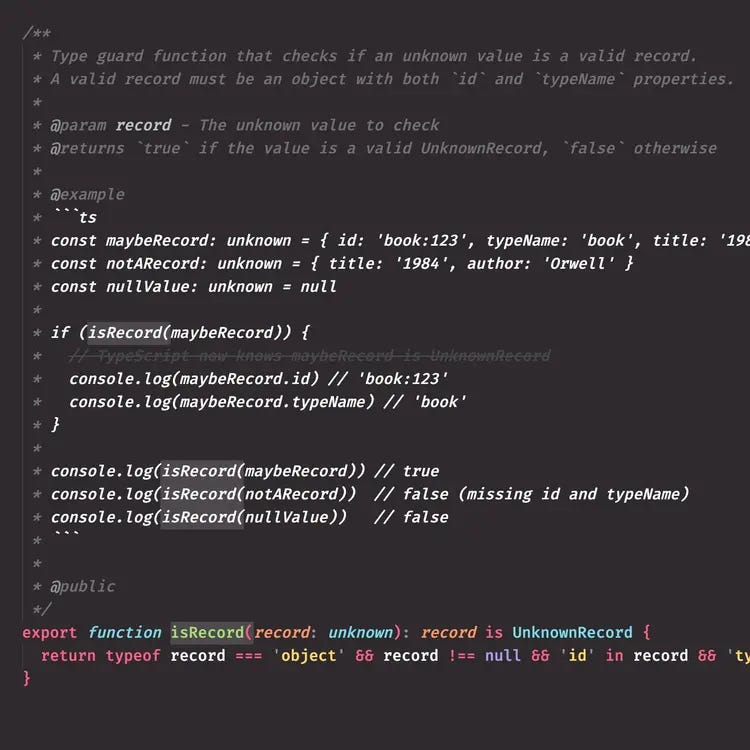
Have you noticed the isRecord type guard popping up in your AI generated code? This highly specific and relatively useless check has become a fixture in Codex outputs, and CEO Steve Ruiz at tldraw recently realized they’re the original source from back in 2022 – oops! It’s a charming but sobering reminder that anything we publish can become a permanent echo in the training data of these models. The code we write today might become a permanent consequence that future agents blindly replicate.
Read: I’m pretty sure isRecord is our fault
2. A new standard for MCP
The Model Context Protocol has officially earned its right to exist as a permanent fixture in the agentic tech stack. The Linux Foundation just announced the MCPA, the first official certification for managing and deploying external tools for AI agents at scale. With the MCP 728 spec finalizing later this month, this vendor-neutral credential is a signal that the enterprise is ready to standardize how models interact with real-world data. Earning this certification proves you understand how to securely wire agents up to the tools they need to actually be useful.
Read: Introducing the MCPA: the First Official Certification for the Model Context Protocol

3. Zooming out on loop engineering
Loops are all the rage these days, so we discussed this great explainer. In the world of agents, loops are the practice of designing AI systems that take an action, observe the results, and repeat until a specific goal is met. We’re well past the days of managing a single orchestrator and entering an era where you are managing complex tiers of AI teams. To successfully manage this new structure, you have to treat your AI like an employee by injecting the exact context needed at every layer of the loop so your agents know when to push forward autonomously and when to surface a problem for human review.
Read: What the hell is a loop, anyway?

4. The engineering productivity gap: how elite AI teams are pulling away
The engineering productivity gap between AI-elite teams and everyone else is real, measurable, and widening every quarter. On July 30 at 10am PT, LinearB will present its latest benchmark update compiled from 2.7M PRs and 253 orgs. Don’t miss how high AI usage drives a 1.7 to 2.2x lift in PR merge rate, and learn the measurement playbook to scale your team’s leverage.

5. Shifting the CLI left for agents
CircleCI just released a ground-up rewrite of their CLI, and it is explicitly designed with agents in mind. Every data returning command now supports structured JSON output and stable exit codes, effectively turning the CLI into a hybridized MCP server. By allowing agents to inspect runs, read logs, and push fixes directly from the terminal without human intervention, CircleCI is proving that established tools must adapt to this new era. Expect to see a lot more of your favorite developer tools shifting further left to accommodate the agentic workflow.
Read: Rebuilding the CircleCI CLI from scratch

6. The widening gap in the velocity paradox
A massive new longitudinal study analyzing 800 developers across 200,000 pull requests mirrors exactly what we have been seeing across the industry in our own benchmarking. When an enterprise mandated a doubling of code output using AI, the engineers actually achieved it, but the per-reviewer workload also doubled. Shipping more code is the easy part. The real challenge is scaling your review and quality infrastructure to handle the incoming wave of automated pull requests. If you don’t have a clear strategy for AI-assisted code review, those massive throughput gains will simply become a massive bottleneck downstream.
Read: AI Writes Faster Than Humans Can Review: A Longitudinal Study of an Enterprise 2x Mandate
